Kuala Lumpur, 23 September 2026 — Wizpresso Founder & CEO Calvin Cheng joined global governance, technology and risk leaders at the CGI Global Governance Summit 2026 in Kuala Lumpur, contributing to a timely discussion on how organisations can realise the value of AI while preserving accountability, assurance and trust.
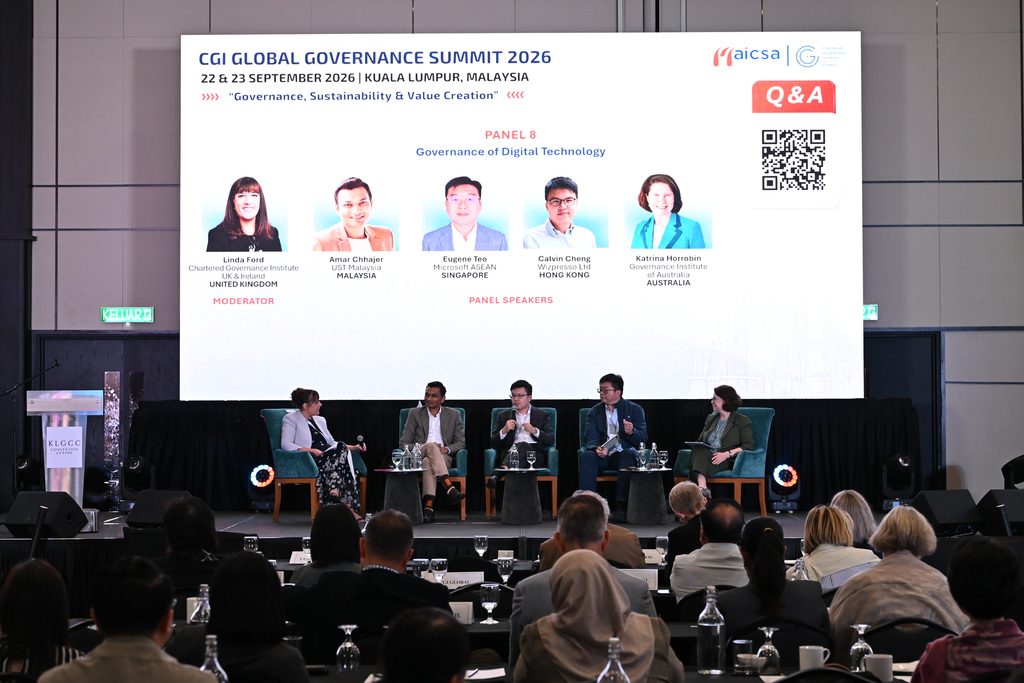
Held on 22–23 September at the KLGCC Convention Centre and organised in conjunction with the MAICSA Annual Conference, the Summit brought together directors, company secretaries, regulators, governance professionals and industry leaders around the theme “Governance, Sustainability & Value Creation.” Across two days, the programme explored the governance implications of geopolitical uncertainty, shareholder activism, ethics, sustainability reporting, board effectiveness and digital transformation.
Calvin appeared on the closing panel, “Governance of Digital Technology,” alongside Amar Chhajer, Country Head of UST Malaysia; Eugene Teo, Chief Security Advisor at Microsoft ASEAN; and Katrina Horrobin, CEO of the Governance Institute of Australia. The panel was chaired by Linda Ford, CEO of the Chartered Governance Institute UK & Ireland.
From AI interest to AI assurance
The panel addressed a central challenge facing boards today: AI adoption is accelerating, yet governance capability has not always kept pace.
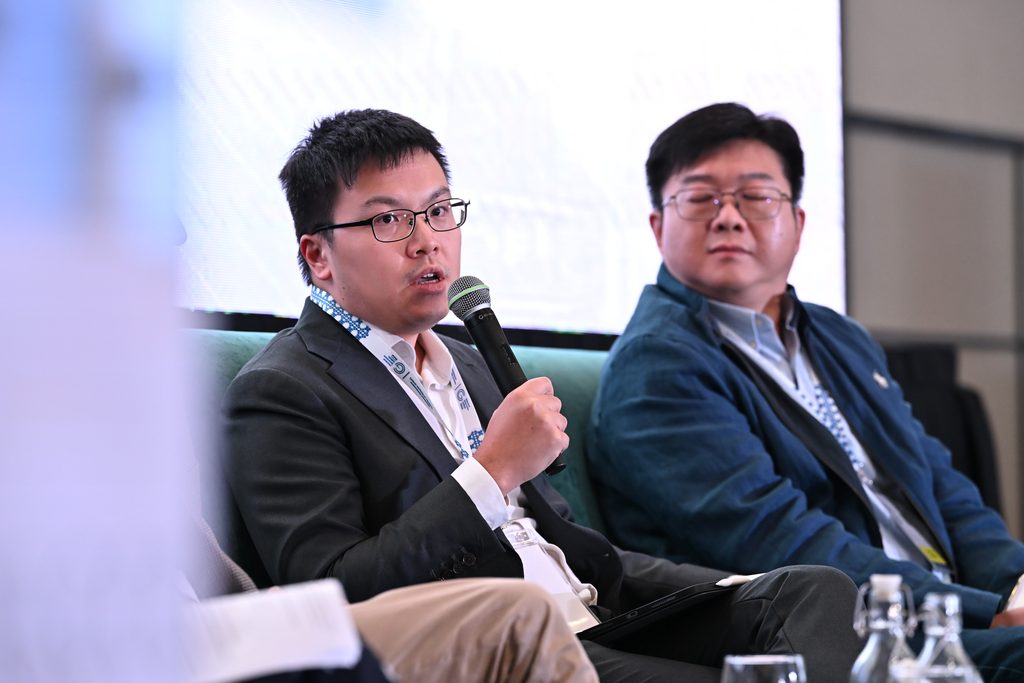
In his remarks, Calvin highlighted findings from Wizpresso and CGI Hong Kong’s AI-readiness work covering 2,500 HKEX-listed companies. While 88% of companies referenced AI in their annual reports or ESG reporting, only 25% referenced AI governance with defined oversight, policies or lifecycle controls. The gap is clear: the AI narrative is advancing faster than the governance infrastructure needed to support it.
“AI is no longer a question of whether organisations will adopt it,” said Calvin. “The question is whether they can adopt it in a way that is safe, accountable, measurable, and genuinely useful.”
For Wizpresso, responsible AI adoption means moving beyond isolated experimentation and embedding AI within clearly defined, governed business workflows. This requires organisations to establish ownership, use approved data sources, maintain review and escalation paths, retain evidence, and measure outcomes—not simply deploy new tools.
A practical maturity path for enterprise AI
Calvin outlined a five-level view of AI adoption, distinguishing personal productivity gains from organisation-wide transformation:
| Level | AI adoption model | Governance implication |
|---|---|---|
| 1 | Individuals use general AI tools for drafting, summarisation, research or meeting notes | Limited visibility, inconsistent controls and difficult-to-measure value |
| 2 | Organisations provide approved tools and basic policies | Improved safety, but AI remains largely a personal productivity tool |
| 3 | AI is embedded in a defined workflow with approved data, scoped tasks, human review and audit trails | Repeatable operational value begins to emerge |
| 4 | Multiple AI-enabled workflow steps are orchestrated to retrieve information, apply rules, identify exceptions and route work | Stronger process design, accountability and evidence become essential |
| 5 | Carefully bounded, more autonomous operations are supported by continuous human assurance | Clear escalation thresholds, robust controls and ongoing monitoring are critical |
“Most organisations are still at Levels 1 or 2,” Calvin noted. “That may improve personal productivity, but it does not necessarily transform the organisation. The greater opportunity begins when AI is embedded into a controlled workflow that the organisation—not an individual user—owns, governs and can evidence.”
This is especially relevant for boards and governance professionals, who increasingly need to assess not only whether AI is being used, but also where it is used, what decisions it influences, what data supports it, who remains accountable and how exceptions are handled.
AI governance in action
The Summit’s discussion reinforced that the most valuable AI use cases are not necessarily the most experimental. Rather, they are frequently high-volume, repeatable workflows involving large volumes of unstructured information, defined rules and a meaningful cost of delay, inconsistency or missed issues.
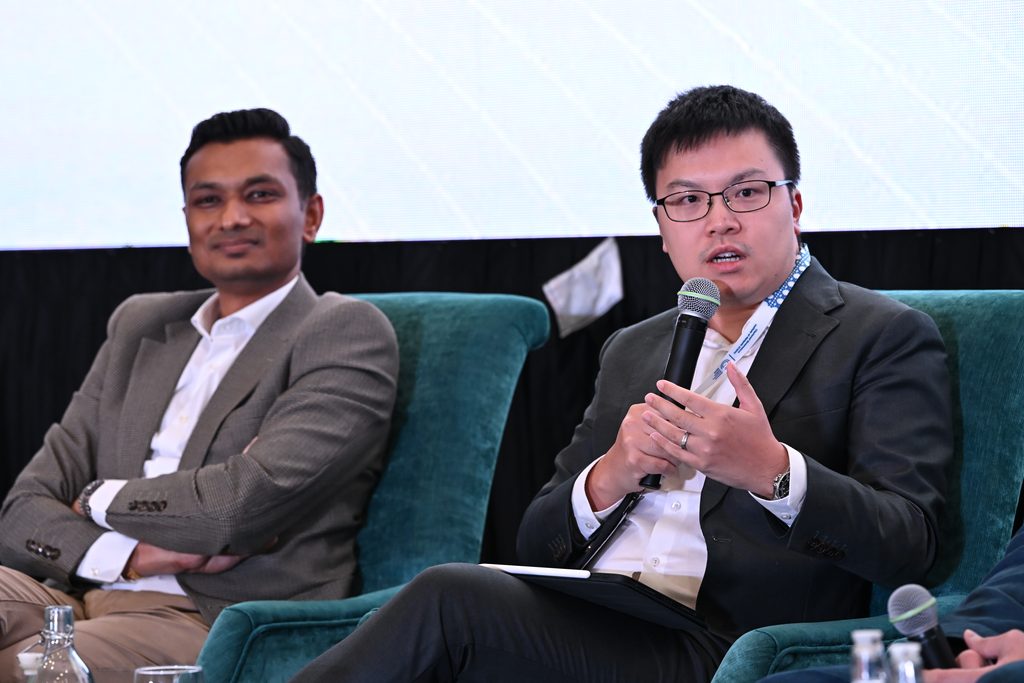
Calvin shared examples of how governed AI can support compliance and governance work:
- Annual report and ESG screening: AI can extract relevant disclosures, map them against corporate-governance or regulatory requirements, flag gaps and inconsistencies, and present supporting evidence for expert review.
- Regulatory monitoring: AI can continuously track regulatory and policy developments across multiple sources, identify changes relevant to a company or sector, summarise potential impact and route follow-up actions to the appropriate owner.
- Application vetting and due diligence: AI can extract facts from source documents, identify missing information, compare submissions against defined rules and produce consistent, traceable review records.
In each of these use cases, AI accelerates information processing and improves consistency. However, final judgement remains with the authorised professional. This is the foundation of trustworthy AI in regulated and high-stakes environments: automation is designed to support better human decision-making, rather than obscure responsibility.
Diligence: operationalising accountable AI
Wizpresso’s Diligence compliance software is designed to help organisations move from fragmented, manual compliance processes to governed, evidence-based workflows.
Through Diligence, compliance, legal, company secretarial and risk teams can operationalise AI governance principles in practical daily work. The platform supports teams in monitoring regulatory change, assessing relevance and impact, assigning follow-up actions, documenting review decisions and retaining a defensible evidence trail.
For example, a regulatory monitoring workflow can be designed to:
- Monitor approved regulatory and market sources on an ongoing basis.
- Identify updates relevant to the organisation’s sector, jurisdiction and internal obligations.
- Summarise key changes and highlight potentially affected policies, procedures or disclosures.
- Route actions to accountable owners with deadlines and escalation paths.
- Maintain a structured record of assessment, response, review and closure.
This is where AI governance becomes tangible. Instead of relying on disconnected inboxes, spreadsheets and ad hoc searches, organisations can create a controlled workflow with clear ownership, traceability and management visibility.
Learn more about Diligence: https://wizpresso.com/products/Diligence
Regulatory Monitoring Workflow: https://wizpresso.com/products/diligence/use-case/regulatory-monitoring
As Calvin emphasised during the panel, successful implementation begins with a business problem—not a technology demonstration. Organisations should identify where capable professionals repeatedly spend time finding, checking, comparing and documenting information, then design a bounded AI workflow around that process.
What boards should expect
The discussion also highlighted the growing responsibility of boards to oversee material AI use cases with the same discipline applied to other strategic, operational and risk-critical initiatives.
For each material AI workflow, boards should be able to understand:
- The business purpose and intended outcome.
- The accountable business owner.
- The data used, its source, quality, permissions and currency.
- The technology provider or model involved.
- Key risks, controls and human-review requirements.
- How the organisation will test, monitor and measure performance.
- The escalation process when outputs are uncertain, incorrect, unavailable or challenged.
- The records retained to demonstrate oversight and decision-making.
“AI governance and data governance are inseparable,” Calvin said. “A system can be technically sophisticated, but if its inputs are incomplete, stale, inconsistent or poorly controlled, its outputs will be unreliable. In governance, poor-quality output can be particularly dangerous because it may look highly confident and professionally written.”
This makes the role of governance professionals increasingly important. Company secretaries, compliance leaders and risk teams are uniquely positioned to translate AI use into board-level oversight through policies, delegated authorities, decision records, risk reporting, disclosure processes and audit trails.
Building trustworthy AI workflows
The key message from the CGI Global Governance Summit was not that organisations should slow down AI adoption. It was that they should adopt AI deliberately: with meaningful use cases, proportionate controls and clear accountability.
Wizpresso believes that the path to responsible AI is practical:
- Start with one important and repeatable workflow.
- Define the business objective, process owner and measurable baseline.
- Use approved and appropriately governed data sources.
- Embed human review for material findings and decisions.
- Create clear escalation thresholds and decision records.
- Retain evidence so that outcomes can be reviewed, challenged and improved over time.“Make one important governance workflow trustworthy before making it bigger,” Calvin concluded. “Define the use case, control the data, keep a human accountable, retain an audit trail, and measure the outcome.”
As AI becomes embedded in core business processes, organisations will need more than productivity tools. They will need infrastructure for accountable adoption—where regulatory intelligence, workflow orchestration, evidence and professional judgement work together.
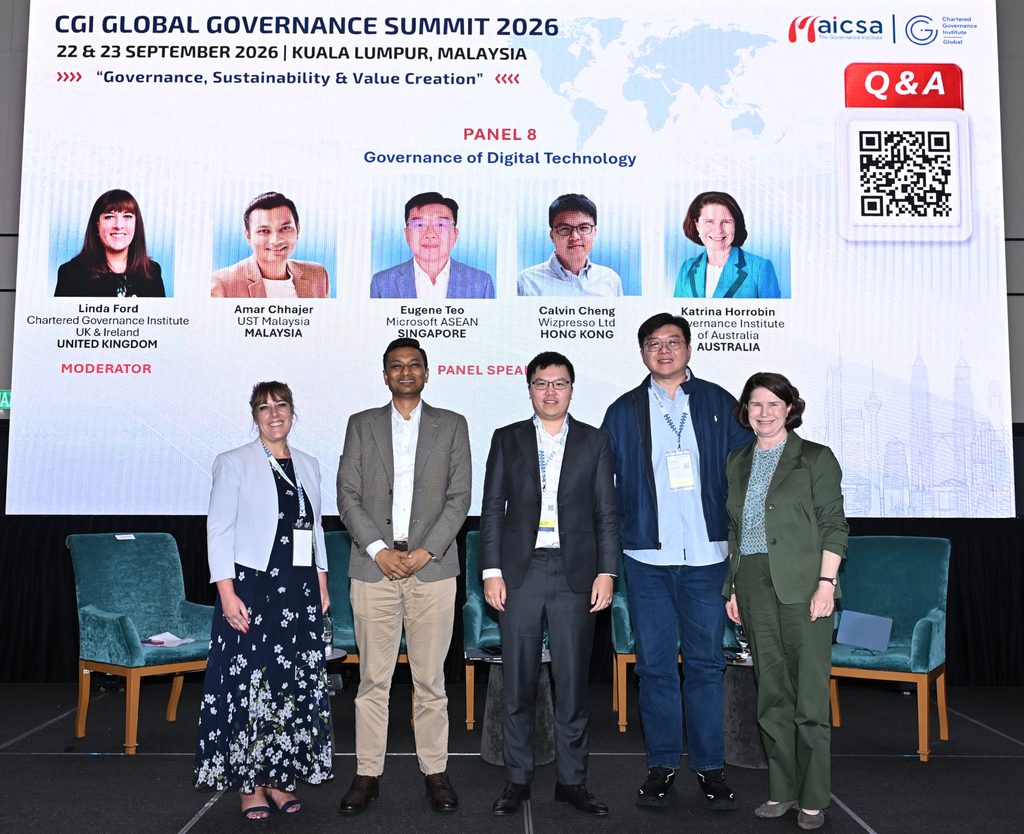
That is the opportunity Wizpresso is building for: helping organisations use AI to strengthen compliance, governance and decision-making, while maintaining the trust that regulated business environments demand.
About Wizpresso
Wizpresso is an enterprise AI and compliance technology company helping organisations streamline regulatory monitoring, due diligence, governance screening and compliance workflows. Through solutions including Diligence, Wizpresso enables teams to turn unstructured information and evolving regulatory requirements into actionable, traceable and auditable workflows.
To learn how Wizpresso can help your organisation operationalise AI governance and regulatory monitoring, contact our team: https://wizpresso.com/Contact